Engine-derived ROI benchmarks for Seattle-area short-term rentals, single-family rentals, and small commercial properties. Numbers come from running real fixtures through the Cost Seg Smart engine, same engine that produces your actual study. Studies from $495.
Operated by Cost Seg Smart. Studies are IRS-aligned with engineer review included. 5 fixture benchmarks computed May 2026.
Numbers above are engine-estimated outputs from running 5 representative fixtures, not promises about what your specific property will produce. Results vary based on actual property condition, year built, renovation history, county assessor data quality, and rental treatment (STR vs LTR). Full per-fixture table, neighborhood breakdown, and downloadable CSV/PDF on the Seattle cost seg benchmarks page.
Seattle sits in an unusually complex state-tax landscape. Washington has no individual income tax, so federal §168(k) bonus depreciation produces the entire income-tax savings calculation with no state-side reconciliation. But WA layers two additional tax mechanisms that affect rental real estate. The 7% Washington capital gains tax (enacted 2022) applies to long-term capital gains above $250K, real estate held primarily for investment is generally exempt, but the exemption boundaries warrant CPA verification for active flipper operators. The Business & Occupation (B&O) excise tax applies to gross rental receipts at varying rates depending on rental classification. Neither affects the cost-seg study itself; both affect multi-year operating-economics modeling.
The bigger practical constraint on Seattle cost-seg is the regulatory STR environment. The City of Seattle's Short-Term Rental Ordinance restricts most STR operations to primary residences with operator presence, with limited exemptions. Absentee STR strategies that work in Joshua Tree, Tahoe, or Gatlinburg do not translate to Seattle city limits. Most cost-seg-relevant Seattle property operates as long-term rental or fix-and-flip. ADU expansion since the 2019 zoning reform unlocked detached and attached ADU construction in most SFR zones, creating a new cost-seg-friendly investor pattern that pairs SFR rental with detached ADU rental on the same lot.
Property archetype-wise, Seattle runs three main investor cohorts. Capitol Hill and Ballard pre-war SFR with heavy post-2010 renovation cost pools; Bellevue and Kirkland Eastside condo and SFR with tech-employer-driven LTR demand; and Renton, Kent, and suburban south-King-County BRRRR fourplexes and small-MF product with lower land allocations. The §469 passive-loss problem applies to W-2 tech professionals taking cost-seg on rental property, the standard paths around it are STR-loophole (limited by Seattle ordinance) and real-estate-professional status (hard for full-time tech employees).
Decoupling: Verify B&O tax treatment of your specific rental activity with your CPA, WA B&O classification rules vary by property type and lease structure.
Verify with your CPA. State tax conformity rules for federal §168(k) bonus depreciation are adjusted frequently, multiple states have modified their treatment two or more times in the past decade. The general framing on this page reflects our understanding as of May 2026, but you should always verify current-year treatment with a qualified CPA or tax attorney before relying on specific dollar projections for your situation.
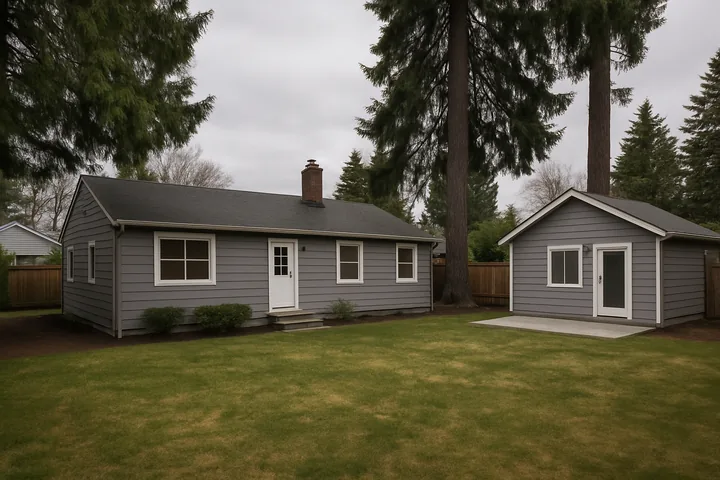
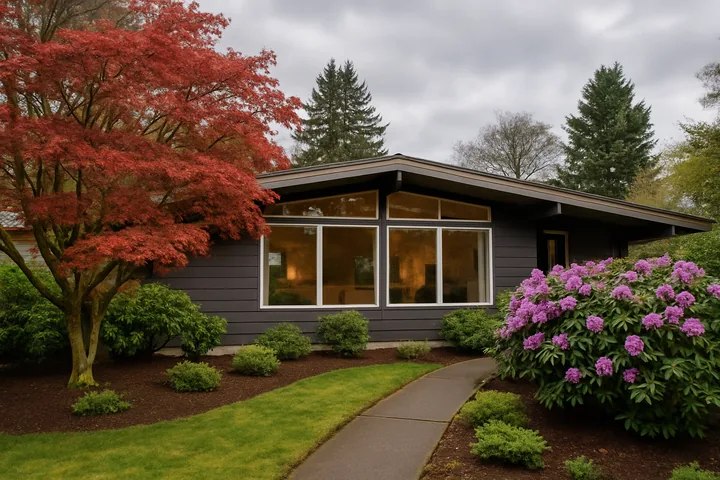
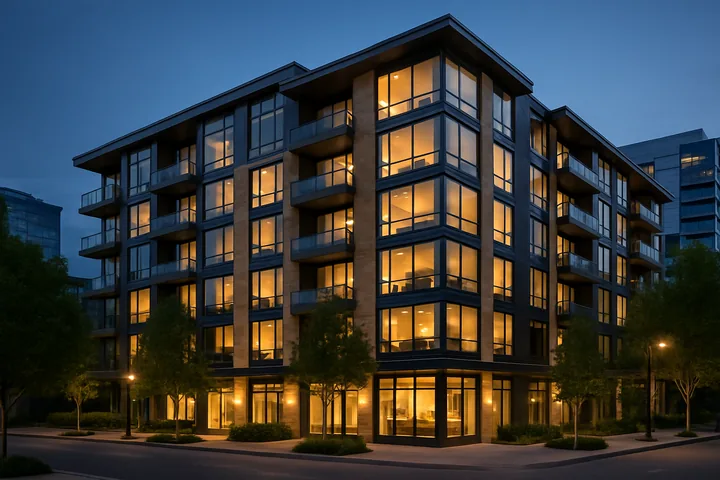
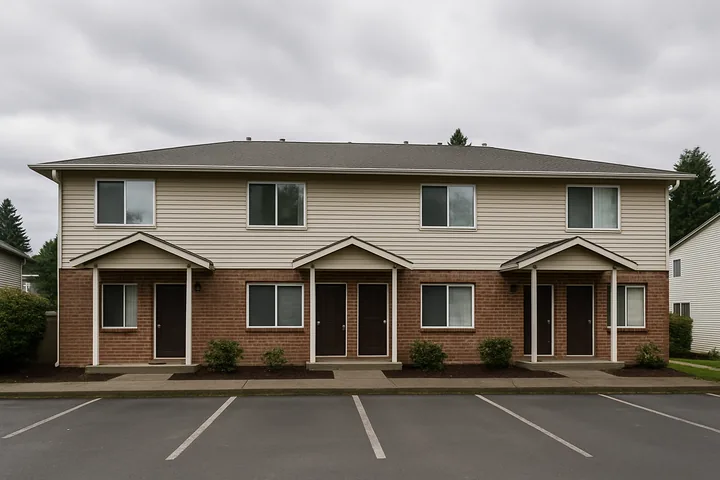
These aren't rough estimates. Each fixture was run through the same engine that produces your actual study, RSMeans 2024 base costs, BLS PPI time index, county assessor land allocation, IRS Pub. 946 / Rev. Proc. 87-56 MACRS classification, 100% bonus depreciation per OBBBA.
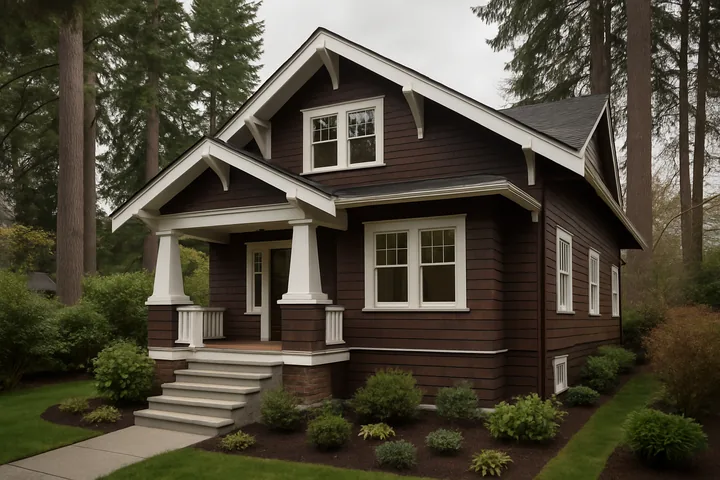
| Purchase price | $925,000 |
| Depreciable basis | $560,550 |
| Land allocation | 39.4% |
| 5-year reclassified | $50,443 |
| 15-year reclassified | $40,930 |
| Total reclass | 16.3% |
| Purchase price | $875,000 |
| Depreciable basis | $524,388 |
| Land allocation | 40.1% |
| 5-year reclassified | $50,775 |
| 15-year reclassified | $34,397 |
| Total reclass | 16.2% |
| Purchase price | $785,000 |
| Depreciable basis | $475,710 |
| Land allocation | 39.4% |
| 5-year reclassified | $43,062 |
| 15-year reclassified | $32,149 |
| Total reclass | 15.8% |
| Purchase price | $1,185,000 |
| Depreciable basis | $556,116 |
| Land allocation | 53.1% |
| 5-year reclassified | $58,241 |
| 15-year reclassified | $5,212 |
| Total reclass | 11.4% |
| Purchase price | $685,000 |
| Depreciable basis | $485,734 |
| Land allocation | 29.1% |
| 5-year reclassified | $64,068 |
| 15-year reclassified | $30,536 |
| Total reclass | 19.5% |
Cost-seg ROI varies more by neighborhood than by city. Seattle's 5 sub-markets each have their own land-allocation pattern and property archetype:
| Neighborhood | Typical value | Typical land allocation | Profile note |
|---|---|---|---|
| Capitol Hill / Central District | $925,000 | ~32% | Dense urban residential with 1910s–1920s Craftsman stock and post-2010 townhome new builds. Higher land allocation. Fix-and-flip and small-MF activity. |
| Ballard / Fremont (Northwest Seattle) | $875,000 | ~28% | 1920s–1950s SFR with heavy post-2010 renovation. ADU expansion since 2019 zoning reform. Mid-tier land allocation. |
| West Seattle | $785,000 | ~26% | SFR-dominant residential west of downtown. Lower land allocation than Capitol Hill. Mix of fix-and-flip and ADU expansion. |
| Bellevue / Kirkland (Eastside) | $1,185,000 | ~30% | Tech-employer-anchored Eastside residential. Higher absolute basis. Mid-rise condo and SFR mix. Stronger corporate-relocation LTR demand. |
| Renton / Kent (suburban King County south) | $525,000 | ~20% | Lower-cost SFR rental market south of Seattle. Lower land allocation. Strong BRRRR and build-to-rent activity. Lighter STR regulation than Seattle proper. |
Methodology note: "Typical land allocation" reflects baseline patterns for the sub-market. For ultra-premium or resort-tier inventory where reconstruction cost exceeds 2.0× the implied depreciable basis after subtracting baseline land, the engine applies a premium land floor (~50%) to keep the study within audit-defensible territory. This means individual fixture engine output may exceed the neighborhood typical, especially for resort-tier ski-in/ski-out, beachfront, or view-premium product where land scarcity dominates value. See the /data/ page for per-fixture land-source attribution. Results vary substantially by specific property condition, renovation history, and assessor records.
City of Seattle Short-Term Rental Ordinance restricts STR operations to primary residences with operator presence, non-primary-residence absentee STR operation is largely prohibited within Seattle city limits. Adjacent jurisdictions: Bellevue, Kirkland, Redmond, Renton, Kent each operate distinct STR rules, some permissive, some restrictive. King County unincorporated areas operate lighter regulation. For STR-intent buyers, the jurisdictional verification matters more than the cost-seg study itself. WA B&O excise tax applies to gross rental receipts, Class A apartment rental, Class B residential rental, and other classifications carry different rates. Material participation under §469 for non-STR rentals requires real-estate-professional status, full-time Seattle tech employees rarely achieve the 750+ hour annual test, but a non-employed spouse running the rental operations frequently can.
For the full IRS-rule reference layer (§168(k), §469 material participation, state conformity), see irsdepreciationrules.com, our open reference site.
For the income-tax side, yes, same federal-only acceleration as Texas, Florida, Tennessee, Nevada. Federal §168(k) at 100% under OBBBA is the entire income-tax-savings calculation, no state addback or decoupling. But Washington layers two additional tax mechanisms that affect the broader investor return: (1) a 7% capital gains tax on long-term gains above $250K, rental real estate held for investment is generally exempt from this specific tax, but flipper activity warrants CPA verification of exemption boundaries; (2) the B&O excise tax on gross rental receipts, which is small in dollar terms but applies year-over-year on rental income rather than at sale. Neither affects the cost-seg study; both affect the multi-year operating-economics overlay.
Generally not in Seattle city limits. The City of Seattle's STR ordinance restricts short-term rentals to primary residences with operator presence, absentee STR operation is largely prohibited. Adjacent jurisdictions (Bellevue, Kirkland, Redmond, Renton, Kent, King County unincorporated) operate distinct STR rules, some permissive, some not. For Seattle-resident investors specifically wanting STR-loophole treatment under §469, the practical path is to acquire property in adjacent permissive jurisdictions or in WA mountain markets (Leavenworth, Suncadia, Lake Chelan) rather than Seattle proper.
Yes, the 2019 zoning reform that unlocked detached and attached ADU construction in most Seattle SFR zones created a meaningfully cost-seg-friendly investment pattern. A buyer acquiring an existing Seattle SFR can add a detached ADU (typical $200K–$400K construction cost) on the same lot and operate both units as separate long-term rentals. The ADU construction cost adds to depreciable basis as a distinct asset, and a cost-seg study can identify 5/7/15-year components (decking, landscaping, electrical, finishes) separately from the 27.5-year structure. Combined Year-1 federal acceleration on a Ballard or West Seattle SFR + ADU project typically produces $60K–$110K of accelerated reclassification at the upper bracket. Note: ADUs must operate as LTR to avoid the STR ordinance issue.
Marginally. The B&O tax is a low-rate gross-receipts excise (varies by classification, but typically under 0.5% for residential rental in most cases). It applies year-over-year on rental income, not at sale or on cost-seg deduction directly. The dollar impact is small relative to the federal cost-seg acceleration. What it does affect is the multi-year operating-cash-flow modeling: a Seattle rental producing $80K of annual rent might owe $300–$400 of B&O tax annually depending on classification, which compounds against operating margin over a 10-year hold. Build this into your operating model; it doesn't change the cost-seg decision but it does affect overall ROI.
Because the typical Seattle tech W-2 income is high enough that converting passive losses to active deductions would be worth significant dollars, but the paths around §469 are structurally hard for full-time tech employees. (1) STR-loophole: blocked by Seattle's STR ordinance (no absentee STR in city limits). (2) Real-estate-professional status under §469(c)(7): requires 750+ hours of real-estate activity annually, more than any other trade or business, incompatible with full-time tech employment. The realistic workarounds: (a) operate the property in an adjacent jurisdiction with permissive STR rules; (b) have a non-employed spouse run the rental operations and claim real-estate-professional status for the spouse; (c) accept passive-loss treatment, suspend losses, consume them later when passive income materializes or property is disposed of.
More general cost-seg questions answered at costsegsmart.com/faq/.
Cost Seg Smart studies are IRS-aligned, engineering-reviewed, and include written audit defense. Pricing is transparent and starts at $495 for residential properties under $300K, full pricing on the main site.